Digital Literacy Narrative
Course Reflection
Step 3
Today, at 21 years old, I started a new chapter by joining an introductory course in digital humanities. What made it special was the diverse group of classmates from various majors like Computer Science, Interactive Media, Film and New Media, Environmental Studies, Business and Marketing, Literature, and Creative Writing. Each of us brought our own skills and experiences into the mix.
Before diving into digital humanities, we already had some digital skills. As an Interactive Media major, I was into user-centered design and interactive storytelling using software like Adobe Creative Suite. I also did a lot of problem-solving and coding with platforms like GitHub.
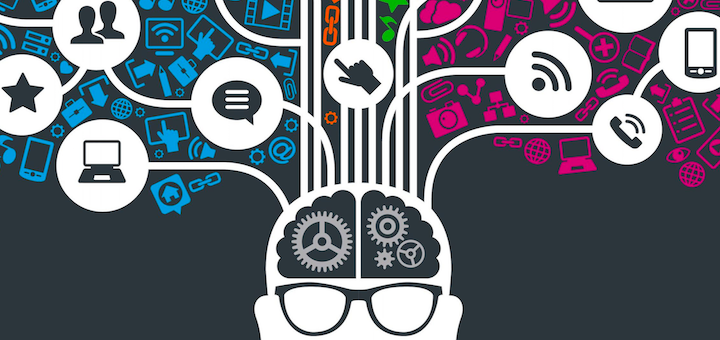
But this course changed how we looked at things. We learned that creating digital content wasn’t just for one field anymore. We made interactive websites, digital art, immersive stories, and even AI-generated content. Working together showed us how art, science, and storytelling could blend together.
We also got into managing and analyzing research data. We used tools like Zotero and Omeka to organize and share our stuff. Learning about data was important for all of us, no matter our majors.
So, this course has been a big deal for all of us. It opened our eyes to new possibilities, brought together tech and the humanities, and made us better at understanding digital stuff. We’re ready to keep learning and working together, especially as AI keeps changing the world around us.
How do I get started? According to Mattingly, in his blog “How to Get Started with the Digital Humanities in 2023 and Why”, he emphasises the importance of hands-on learning and problem-solving in the field of digital humanities. It encourages individuals to engage in personal projects that address problems they find interesting or relevant to their research. He also suggests that tackling such projects not only helps in building a portfolio but also enhances problem-solving skills and technical expertise.
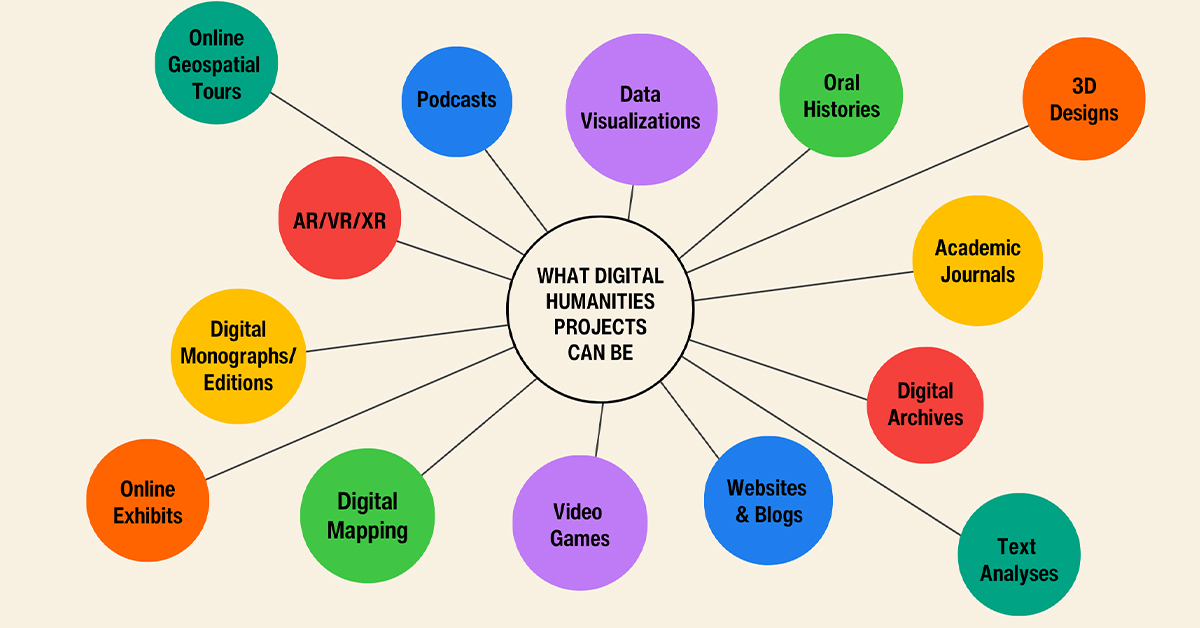
Personal projects are seen as opportunities to develop skills incrementally, even if the initial attempts are not perfect. He shares their own experience of creating a complex application despite lacking prior programming knowledge. Perhaps this way highlights the importance of perseverance and learning from mistakes, emphasizing that initial projects serve as learning experiences that can be improved upon over time.
Furthermore, community support is highly valued within the digital humanities field. It is important to seek help from peers and mentors whenever we need it, highlighting the supportive nature of the community. Additionally, the importance of continuous learning and adaptation is emphasized, as individuals encounter challenges and seek alternative resources to overcome them.
There is also a versatility and transferability of skills learned in digital humanities beyond one’s primary field of expertise, which is why I aim to at least keep up with it. These skills broaden one’s professional opportunities both within and outside academia.
Furthermore, the blog highlights the dynamic nature of digital humanities, noting its continual evolution due to advancements like machine learning. This evolution creates new opportunities for research and problem-solving, making the field perpetually engaging and relevant. Mattingly encourages us to explore digital humanities as a means to engage with their discipline using modern methods, acknowledging that mastery in this area is an ongoing journey rather than a fixed destination.
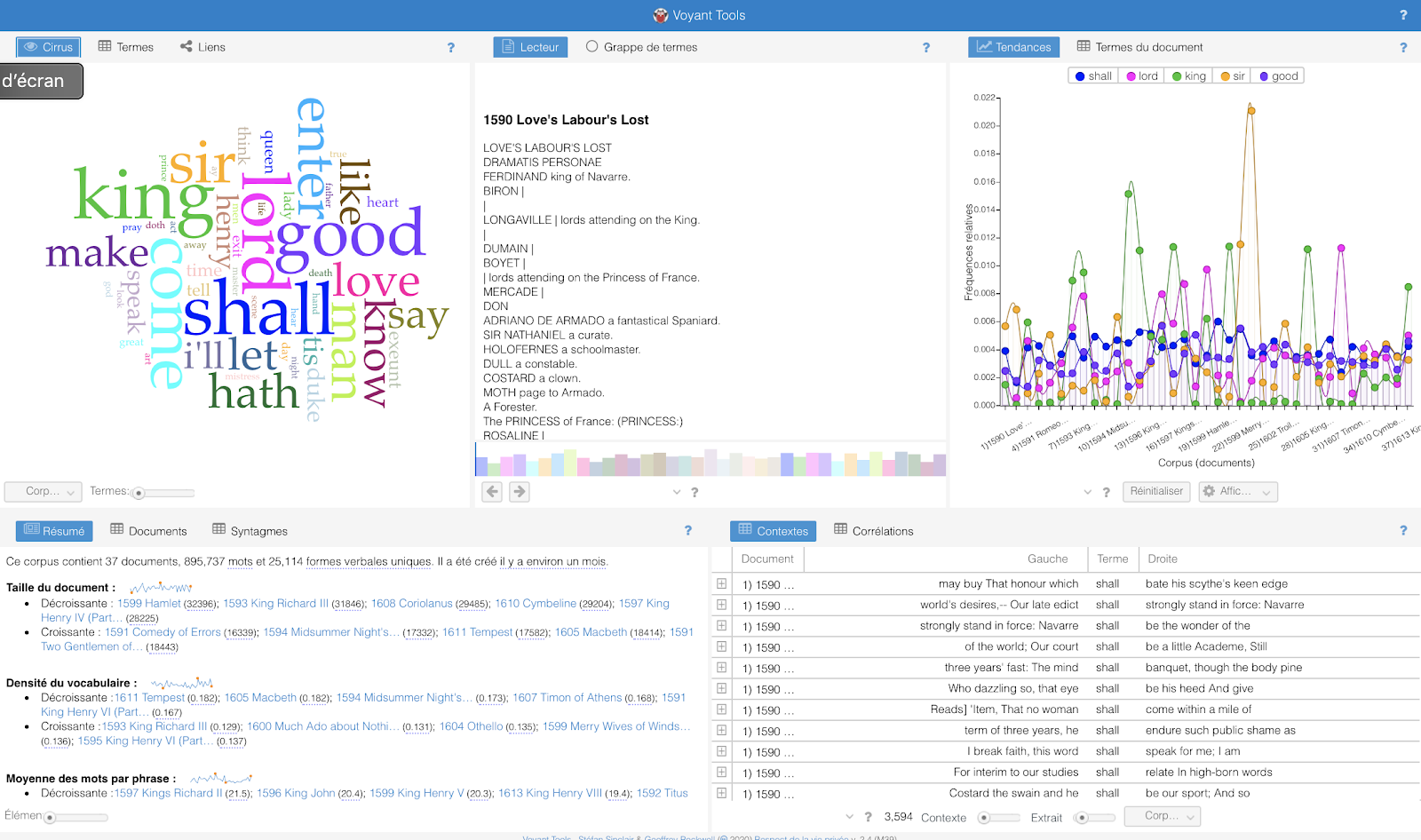
Voyant tools is awesome. I am only sad to learn about it so late. I’ve used it for projects outside this course for further insight. It especially comes in handy for analysis for academic papers that I am to study to write essays. Its versatility and adaptability over a variety of text-based projects is perfect when used as a final step to gain clarity on what I am working with.
If it is the author of a work that I am studying, it helps me examine the thematic evolution of their work over time. For example, I can use Voyant to analyze the frequency and distribution of thematic words across the different novels of Virginia Woolf to see how her focus on themes like feminism and existentialism evolved throughout her career.
It also comes in handy when I am comparing different works. For example, I can analyse speeches or letters by different historical figures to uncover underlying themes and rhetoric unique to them or their time. This provides me insights into changing political ideologies, rhetoric styles, and national priorities. In the same way, I could study news articles or blog posts about a specific event or topic to track how language and coverage change over time. Analyzing articles on climate change from different decades could reveal shifts in public discourse and media emphasis.
In class, we used ChatGPT in ways I’ve never used before. It felt very intuitive when we asked it to organize in a table the OCR’d data from phonebooks. Obviously, it did not get everything right in the first try, but with carefully tweaking prompts and adapting to the outcomes, we can get reliable, easy-to-read results from ChatGPT. This really stretched my mind on the things Large Language Models are capable of.
This sent me down the rabbit hole of other LLMs in the space like, Claude 3, Gamini and Llama 3, all specializing is slightly different things. Orange Data Mining is another interesting software we dealt with in class. I am not 100% sure how it works to classify the images, but I hope to understand more when I use it for assignment 4.
This is a bit of a tangent, but my favorite reading in this course thus far is “Map Power and Map Methodologies for Social Justice” by Shiloh Krupar. He says that with more people making maps, there’s a clash between experts and amateurs. Some worry that amateur maps might not be as accurate or reliable as ones made by professionals. This tension shows us that mapping isn’t just about drawing lines on a page—it’s about who has the power to shape the story.
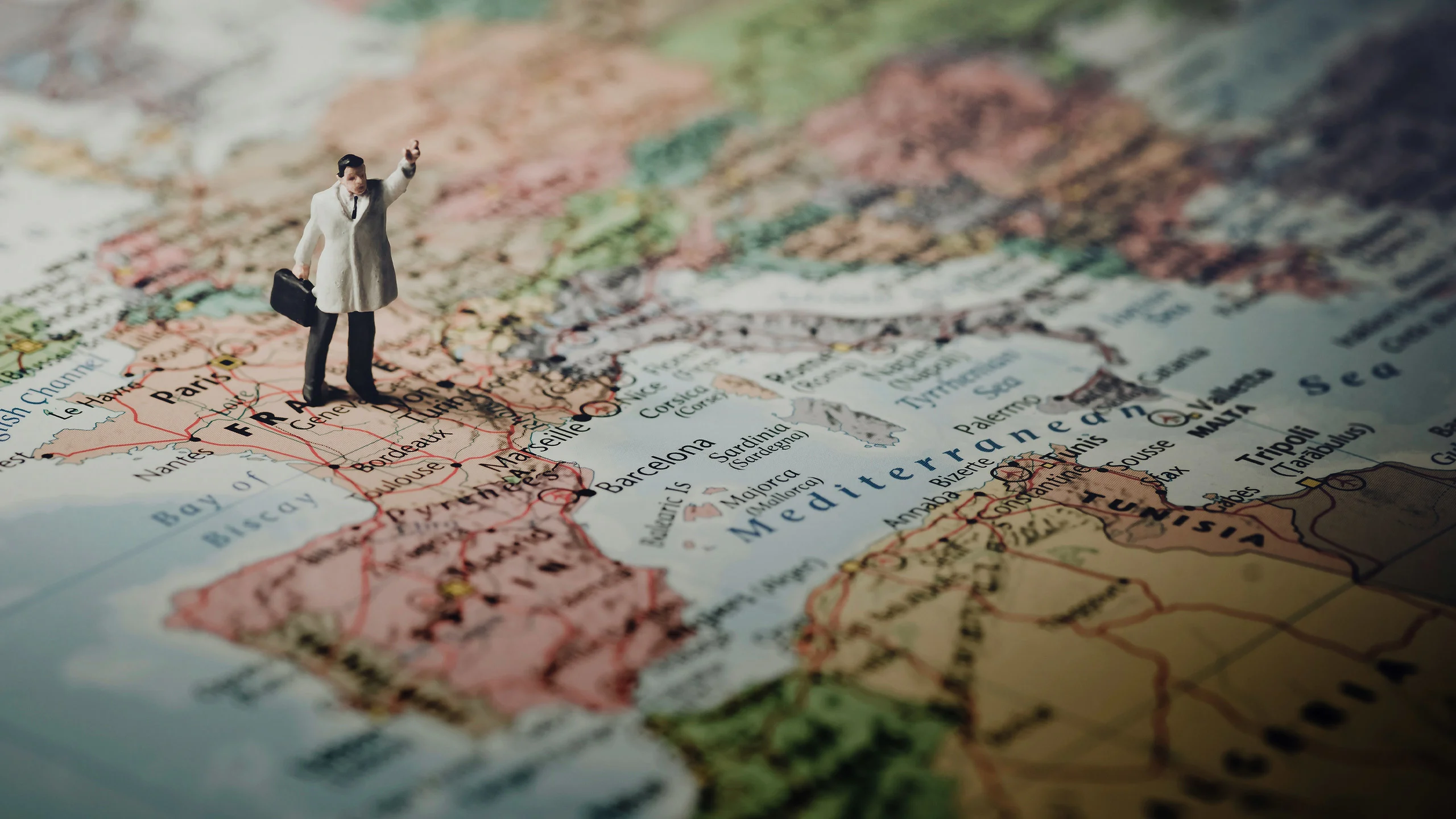
Another concern is about big companies controlling map data and using it for profit. This raises questions about privacy and who gets to benefit from mapping projects. It’s a reminder that not all mapping efforts are equal, and some might serve corporate interests more than the public good.
Krupar suggests that we need to teach “map literacy” in schools and universities. This means not just reading maps but understanding how they’re made and what they represent. By doing this, we can learn to use maps as tools for change and challenge the status quo.
In the end, the message is clear: maps aren’t just about geography—they’re about power and who gets to wield it. By learning about maps and how they work, we can become more informed citizens and advocates for social justice. Mapping as a form of protest and argument also functions as a method of resistance. Throughout history, artists and activists have utilized mapping to defy traditional perspectives and claim authority over their spaces and stories. By crafting alternative maps, they aim to present diverse viewpoints of the world.
A fascinating reading on from Spring 2 is “How AI is hijacking art history”. It criticizes how artificial intelligence is used to discover and rebuild old artworks. The author, an art historian, argues that these AI projects are more about promoting AI technology than providing new insights into art history. Several examples are given where AI was used to “reveal” or “restore” famous artworks. These projects were done by a tech company, not by art experts, and used old data and imaging techniques. The author is sceptical of the value of these projects, claiming they don’t really add anything new to our understanding of art. The article points out several issues with using AI in art history:
- No New Information: AI often just repackages old data without uncovering anything truly new or insightful.
- Focus on Tech Over Art: There is a concern that science and technology are getting more attention and resources than the humanities, like art history, which could lead to a loss of deeper cultural understanding and sensitivity.
- Need for Critical Examination: The author believes that AI’s role in art and history needs more critical examination. They suggest that AI should not replace the deep, thoughtful analysis that human scholars provide in understanding art.
The paper “Collaboration in Digital Humanities Research – Persisting Silences” discusses how collaboration is common in Digital Humanities (DH) research but not well-examined or understood, especially regarding the involvement of technology and non-academic partners. The authors argue that discussions about collaboration often miss the complexity and diverse nature of teamwork in DH. They suggest that both human and non-human (like software and technology) participants in research should be considered more carefully to improve how DH research is done. The paper points out several key issues in how collaboration in DH is currently viewed and suggests improvements:
- Overlooked Complexities: Collaborations in DH often involve various disciplines and technologies, but the depth and challenges of these collaborations are rarely discussed in detail. The authors want a fuller, more detailed examination of these issues.
- Challenges of Working Across Different Fields: When researchers from different disciplines work together, they often face difficulties due to their different methods and goals. The paper calls for better ways to handle these differences.
- Recognizing Technology’s Role: The paper emphasizes that technology isn’t just a tool but an active participant in research. Recognizing this can change how we think about and conduct research.
- Unspoken Issues: The paper criticizes the lack of detailed discussion on collaboration in academic writings, noting that important aspects are often ignored or simplified.
Step 2
Today, at 21 years old, I started a new chapter by joining an introductory course in digital humanities. What made it special was the diverse group of classmates from various majors like Computer Science, Interactive Media, Film and New Media, Environmental Studies, Business and Marketing, Literature, and Creative Writing. Each of us brought our own skills and experiences into the mix.
Before diving into digital humanities, we already had some digital skills. As an Interactive Media major, I was into user-centered design and interactive storytelling using software like Adobe Creative Suite. I also did a lot of problem-solving and coding with platforms like GitHub.
My classmates had their own digital toolkits too. The Computer Science folks were coding wizards with Python and Java, while the Film and New Media crew loved making digital stories. Environmental Studies students were into data analysis, and Business and Marketing people knew their way around data analytics. Literature and Creative Writing students were masters at finding stuff in research databases.
But this course changed how we looked at things. We learned that creating digital content wasn’t just for one field anymore. We made interactive websites, digital art, immersive stories, and even AI-generated content. Working together showed us how art, science, and storytelling could blend together.
We also got better at working together online using platforms like Slack and Discord. We had cool discussions that mixed up our different areas of knowledge and sparked new ideas. It showed us that collaborating across different fields could make us more creative.
We also got into managing and analyzing research data. We used tools like Zotero and Omeka to organize and share our stuff. Learning about data was important for all of us, no matter our majors.
We also thought a lot about how AI is changing things. Computer Science folks worried about the ethics of AI, while Literature students wondered how AI might affect storytelling. Environmental Studies people saw how AI could help with climate change, and Business and Marketing folks looked at how AI could analyze markets.
Looking ahead, we’re excited to keep exploring new ideas and ways of working. We want to mix different fields together and see what happens. We think that working together across different subjects will help us come up with new and better ideas.
So, this course has been a big deal for all of us. It opened our eyes to new possibilities, brought together tech and the humanities, and made us better at understanding digital stuff. We’re ready to keep learning and working together, especially as AI keeps changing the world around us.
How do I get started? According to Mattingly, in his blog “How to Get Started with the Digital Humanities in 2023 and Why”, he emphasises the importance of hands-on learning and problem-solving in the field of digital humanities. It encourages individuals to engage in personal projects that address problems they find interesting or relevant to their research. He also suggests that tackling such projects not only helps in building a portfolio but also enhances problem-solving skills and technical expertise.
Personal projects are seen as opportunities to develop skills incrementally, even if the initial attempts are not perfect. He shares their own experience of creating a complex application despite lacking prior programming knowledge. Perhaps this way highlights the importance of perseverance and learning from mistakes, emphasizing that initial projects serve as learning experiences that can be improved upon over time.
Furthermore, community support is highly valued within the digital humanities field. It is important to seek help from peers and mentors whenever we need it, highlighting the supportive nature of the community. Additionally, the importance of continuous learning and adaptation is emphasized, as individuals encounter challenges and seek alternative resources to overcome them.
There is also a versatility and transferability of skills learned in digital humanities beyond one’s primary field of expertise, which is why I aim to at least keep up with it. These skills broaden one’s professional opportunities both within and outside academia.
Furthermore, the blog highlights the dynamic nature of digital humanities, noting its continual evolution due to advancements like machine learning. This evolution creates new opportunities for research and problem-solving, making the field perpetually engaging and relevant. Mattingly encourages us to explore digital humanities as a means to engage with their discipline using modern methods, acknowledging that mastery in this area is an ongoing journey rather than a fixed destination.
This is a bit of a tangent, but my favorite reading in this course thus far is “Map Power and Map Methodologies for Social Justice” by Shiloh Krupar. He says that with more people making maps, there’s a clash between experts and amateurs. Some worry that amateur maps might not be as accurate or reliable as ones made by professionals. This tension shows us that mapping isn’t just about drawing lines on a page—it’s about who has the power to shape the story.
Another concern is about big companies controlling map data and using it for profit. This raises questions about privacy and who gets to benefit from mapping projects. It’s a reminder that not all mapping efforts are equal, and some might serve corporate interests more than the public good.
Krupar suggests that we need to teach “map literacy” in schools and universities. This means not just reading maps but understanding how they’re made and what they represent. By doing this, we can learn to use maps as tools for change and challenge the status quo.
In the end, the message is clear: maps aren’t just about geography—they’re about power and who gets to wield it. By learning about maps and how they work, we can become more informed citizens and advocates for social justice. Mapping as a form of protest and argument also functions as a method of resistance. Throughout history, artists and activists have utilized mapping to defy traditional perspectives and claim authority over their spaces and stories. By crafting alternative maps, they aim to present diverse viewpoints of the world.
Step 1
As a 21-year-old university student, I embarked on a transformative journey by enrolling in an introductory course in digital humanities. What made this experience particularly enriching was the diverse group of classmates who joined me. Our majors spanned a wide spectrum of disciplines, including Computer Science, Interactive Media, Film and New Media, Environmental Studies, Business and Marketing, Literature, and Creative Writing. Together, we have explored digital literacy, each bringing a unique set of strategies and skills into the classroom.
Before immersing ourselves in the world of digital humanities, we had already developed our own strategies for navigating the digital landscape in both daily life and academics. As an Interactive Media major, I was well-versed in user-centered design and interactive storytelling, often utilizing software like Adobe Creative Suite. My academic journey was marked by problem-solving, algorithm design, and collaborative coding through platforms like GitHub.
My peers from Computer Science, Film and New Media, Environmental Studies, Business and Marketing, Literature, and Creative Writing had their own digital toolkits. Interactive Media students excelled in coding languages such as Python and Java, using them for content creation, software development, and data manipulation. Film and New Media enthusiasts delved into multimedia production and digital narrative creation. Environmental Studies majors leveraged data analysis software for environmental research, while Business and Marketing students honed their skills in data analytics platforms for market analysis. Students in Literature and Creative Writing dived deep into research databases to fuel their literary and artistic pursuits.
However, the digital humanities course has illuminated the intersection of our diverse disciplines in the digital age. Content creation, once thought to be confined to specific fields, took on a multidisciplinary dimension. We explored creating interactive websites, digital art installations, immersive narratives, and AI-generated content. Our collaborative efforts showcased the power of interdisciplinary collaboration, blurring the lines between art, science, and storytelling.
Social interaction and collaboration also evolved. Platforms like Slack, Discord, and online forums became hubs for exchanging ideas, sparking discussions, and collaborating on projects. We found ourselves engaging in thought-provoking conversations that spanned our areas of expertise, enriching our perspectives and generating innovative ideas. Collaborating across disciplines proved to be a catalyst for creativity and interdisciplinary thinking.
Research data management and manipulation emerged as a common thread that united us all. We delved into text analysis, data visualization, and digital archives. Tools like Zotero and Omeka became invaluable for organizing, annotating, and sharing research materials. The importance of data literacy transcended individual majors, equipping us to navigate the data-driven landscape of the digital age.
Our critical reflection on our current abilities led us to appreciate the concept of “computational thinking” in the age of AI. We understood that skills in data analysis, algorithm understanding, and result interpretation were universally valuable, regardless of our major. As AI continues to shape our world, these skills will empower us to harness its potential for innovation and informed decision-making.
Digital humanities has broadened our horizons, offering fresh perspectives on our respective fields of study. We began to contemplate the ethical implications of AI and data usage within our disciplines. Computer Science majors questioned the ethical responsibilities of AI developers, while Literature and Creative Writing students considered the impact of AI-generated content on storytelling. Environmental Studies majors explored AI’s potential in climate change monitoring, and Business and Marketing students delved into AI-driven market analysis.
Looking ahead, we are excited to continue our exploration of new ways of thinking and working. We aim to cultivate a holistic approach to education that recognizes the value of interdisciplinary thinking in a digitally driven world. We envision a future where collaboration between artists, scientists, scholars, and creators becomes the norm, fostering innovation and pushing the boundaries of our fields.
In conclusion, our journey through digital humanities has been transformative. It has expanded our horizons, bridged the gap between technology and the humanities, and equipped us with a multifaceted understanding of digital literacy. As we continue to navigate the digital landscape, we are poised to embrace new ways of thinking and working that promote interdisciplinary collaboration and responsible digital citizenship. In the age of AI, we are ready to embrace the challenges and opportunities that lie ahead.